
Let’s start with the uncomfortable truth.
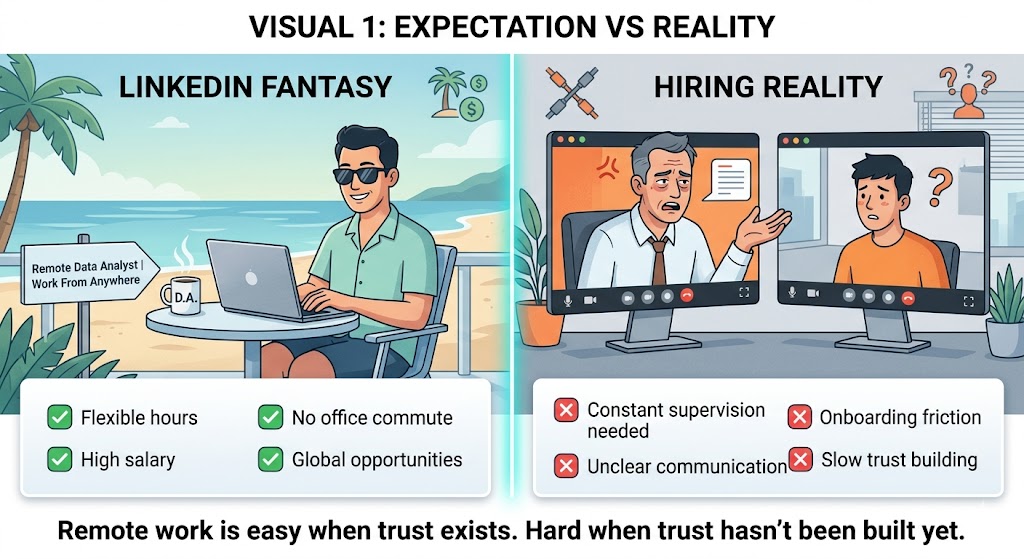
If you’re a fresher searching for remote data analyst jobs, what you probably want is not remote work.
What you actually want is flexibility, better work-life balance, no relocation stress, and maybe the freedom to start your career from your current city.
Completely understandable.
But somewhere between LinkedIn success stories, “work from anywhere” posts, and screenshots of remote offers, many beginners have developed a distorted view of the market.
It sounds like this:
"I’ll learn SQL, Power BI, maybe Python, and get a remote data analyst job."
Possible?
Yes.
Common?
Not even close.
Because here’s the business reality:
Companies are not just hiring skills.
They are hiring reliability.
And for fresher analytics jobs, reliability is the exact thing employers haven’t seen yet.
Why Remote Fresher Hiring Is Limited
This comes down to trust economics.
A mid-level analyst with 4 years of experience? Low supervision required.
A fresher in their first entry level analytics job? Completely different equation.
They may need help with:
- ambiguous tasks
- business context
- stakeholder communication
- reporting expectations
- debugging
- prioritization
That’s normal.
Freshers are supposed to learn.
But learning remotely is expensive for employers. Not financially. Operationally.
Training a beginner through endless Slack messages and Zoom calls is slower than turning to someone in-office and saying: "Walk me through what you did."
That’s why many data analyst jobs in India for freshers are hybrid or in-office first. Not because companies hate flexibility. Because onboarding beginners remotely is harder.
Startups Sound Remote-Friendly. Often They’re Less Beginner-Friendly.
This surprises people. Startups often market flexibility. But flexibility does not mean fresher friendliness.
A startup hiring a data analyst usually wants:
- fast execution
- ownership
- low handholding
- independent problem-solving
That profile rarely matches a complete beginner.
A fresher expecting mentorship-heavy remote learning inside a fast-moving startup is often imagining something that doesn’t exist. Not impossible. Just uncommon.
LinkedIn Creates Survivorship Bias
You see: "Got my dream remote analyst role!"
You don’t see:
- 600 ignored applications
- prior experience
- referral advantage
- domain expertise
- previous internship background
Social media amplifies outcomes. Not context. That creates bad assumptions.
The Scam Problem Nobody Warns Freshers About
This matters. Because “remote job” desperation attracts bad actors.
Common red flags:
- asking for registration fees
- paid assessments
- “security deposit” requests
- guaranteed placement promises
- suspicious recruiter communication
- vague company details
- too-good-to-be-true compensation
Rule: If a job asks you to pay money, walk away. Real employers pay employees. Not the other way around.
So Are Remote Data Analyst Jobs Real?
Yes. Absolutely.
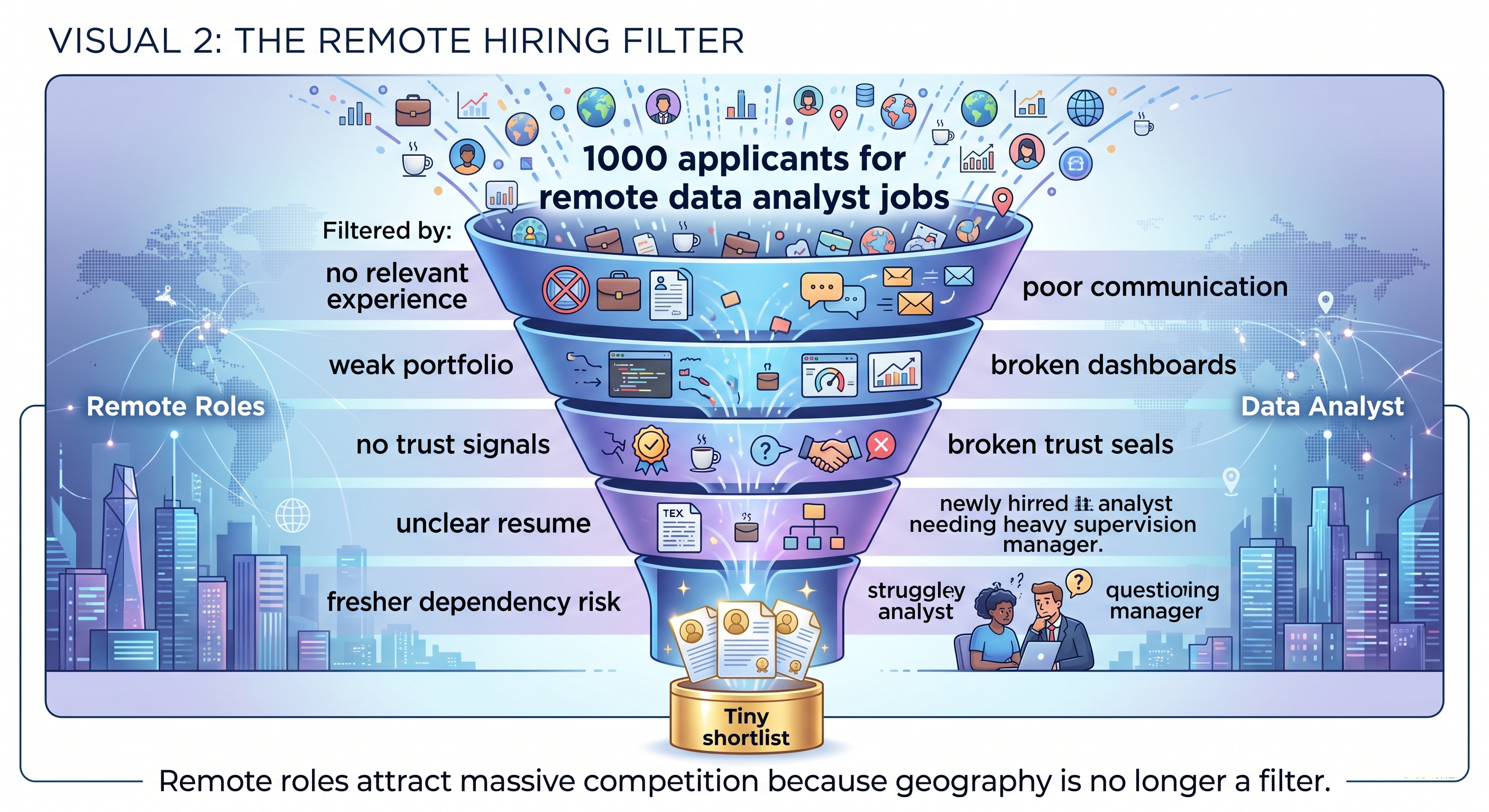
But context matters. Remote roles are far more realistic if you have:
- prior internship experience
- strong portfolio
- domain-specific projects
- excellent written communication
- self-management signals
- proven execution history
Remote work is easier to win when trust already exists. Freshers start with less trust. That’s the difference.
The Better Strategy (Instead of Chasing Fantasy)
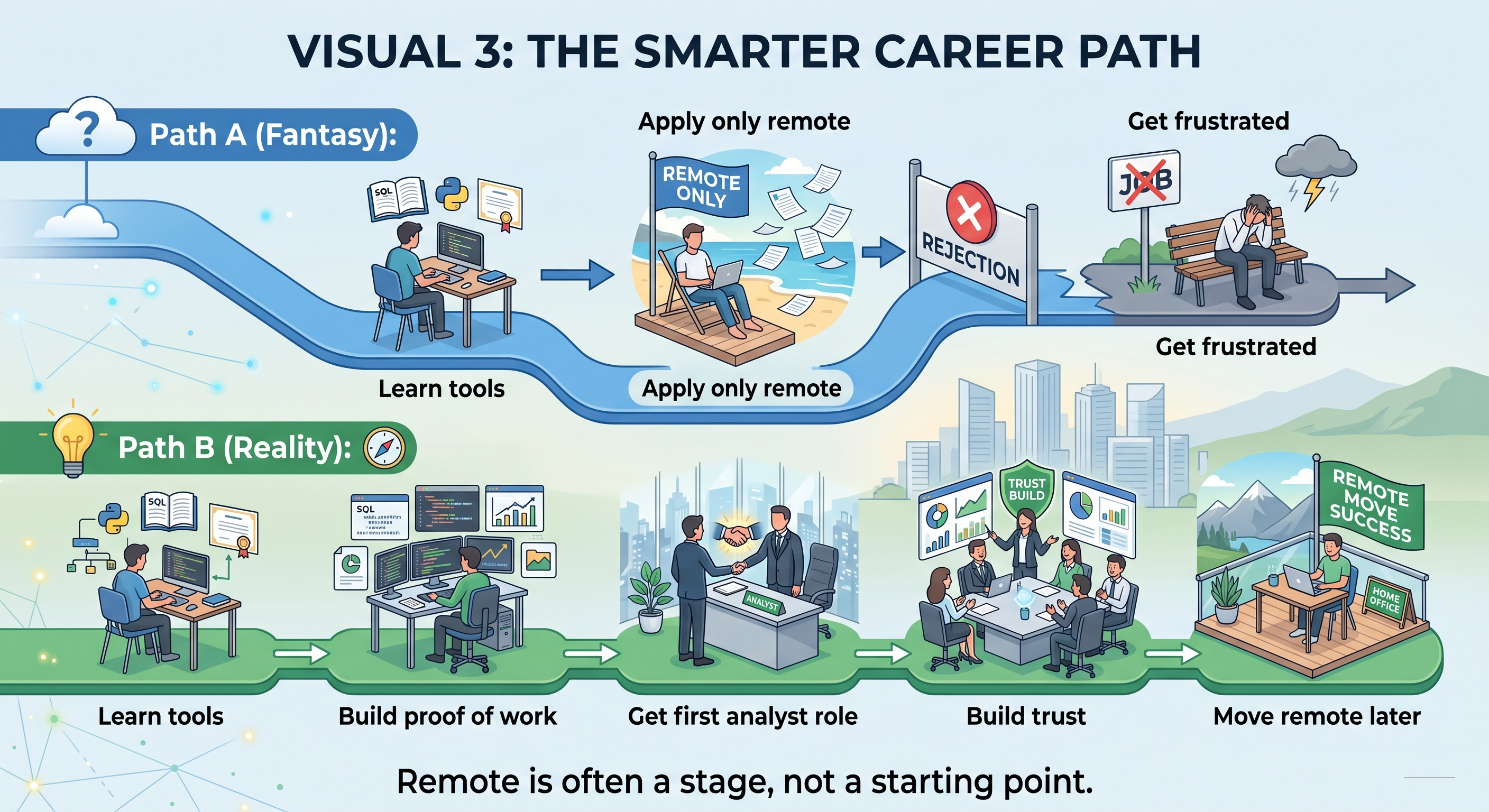
If your goal is your first data analyst job in India, optimize for employability first. Remote can come later.
1. Be Open to Hybrid
Hybrid roles dramatically expand opportunity. A candidate filtering only remote roles often shrinks their market too aggressively.
2. Build Trust Signals
Ask yourself: Why would a company trust me remotely?
Good signals:
- strong data analyst portfolio
- original analytics projects
- domain-focused case studies
- internships
- freelance analytics work
- strong communication
3. Use Geography Strategically
If relocation is difficult, target:
- hybrid roles in nearby hubs
- flexible smaller firms
- contract analytics work
- remote internships
Broader options > rigid filtering.
4. Improve Written Communication
Remote teams rely heavily on async communication. If your portfolio explanations are vague, remote hiring becomes harder. Clear writing matters. More than freshers realize.
Final Thought
The question is not: "Do remote data analyst jobs exist?" They do.
The better question is: "Are they the smartest target for a fresher?" Usually, no.
Because your first job is not just about convenience. It’s about building credibility.
Once employers trust your execution, remote becomes much easier. Until then? Optimize for getting in. Not for getting the perfect setup immediately.
Because career leverage comes before career flexibility.
Grit Over Excuses.
— The Grito Team